
The Short Answer
Not feeling in love the way you did early on does not mean love is gone. Long-term love is quieter and less constant than early romantic intensity, and most people who ask this question are comparing their current marriage to the feeling of a new relationship rather than to what committed love actually looks like after years together. That comparison alone can manufacture a doubt that the marriage itself has not actually earned.
What This Question May Really Be About
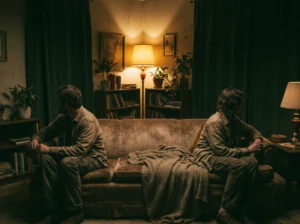
Someone asking this is often frightened, worried that a lack of constant warm feeling means something is fundamentally wrong, or that they made a mistake marrying their spouse. Others are questioning whether they are staying out of habit rather than genuine attachment. Both concerns are worth taking seriously, but neither is answered by the presence or absence of butterflies alone.
Why This Doubt Shows Up
Early romantic love is driven partly by novelty and uncertainty, both of which fade naturally as a relationship becomes stable and familiar. Stress, exhaustion, unresolved conflict, and simple day-to-day routine can also flatten the emotional experience of a marriage without actually changing the underlying commitment or care. It is common to mistake the absence of intense feeling for the absence of love itself.
Separating Facts From Interpretation
The fact might be: “I do not feel excited or emotionally activated around my spouse most days.” The interpretation might be: “I must not love them anymore.” A flattened emotional state is a real and common experience, particularly during stressful seasons. It is a much bigger leap to conclude that the underlying bond has disappeared, especially if you still care about your spouse’s wellbeing and picture a future together.
What This Does and Does Not Mean
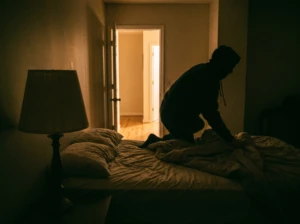
Questioning your feelings does not mean your marriage is over, and it does not make you a bad spouse. It does mean something in the relationship, connection, novelty, quality time, has thinned out and deserves attention. At the same time, if you notice genuine relief at the idea of separating, or a complete absence of care for your spouse’s wellbeing, that is a different and more serious signal worth examining honestly.
What You Can Actually Do
Ask yourself a more specific question than “do I love them”: do you still care what happens to them, do you still want good things for their life, would you feel a real loss if they were gone. These questions tend to reveal the underlying bond more accurately than a vague feeling check. Then look honestly at how much intentional time, attention, and appreciation you have actually given the relationship recently, since love that is starved of attention often goes quiet without actually disappearing.
How to Talk About It With Your Spouse
If you can, share the doubt honestly rather than sitting with it alone: “I have been feeling disconnected lately and I want to understand why, not because I want to leave, but because I want us to feel close again.” Framing it as a shared project rather than a private verdict tends to open the door to real reconnection instead of triggering fear or defensiveness.
What to Watch For
A hopeful sign is that the doubt feels tied to a specific season, stress, distance, routine, rather than a deep and long-standing indifference. A more serious sign is persistent contempt, a complete loss of interest in your spouse’s life, or genuine relief at the thought of separating. These point toward something that likely needs direct attention rather than simple reconnection effort.
When to Seek Additional Help
Individual therapy can help you sort through whether this doubt is about the marriage itself or about something else entirely, unresolved personal patterns, unmet needs, or unrelated stress. Couples therapy is especially useful if both partners recognize the disconnection and want structured support rebuilding it together.
Bottom Line
Doubting whether you still love your spouse is common and does not automatically mean the love is gone. It usually means the relationship needs deliberate attention rather than a verdict, and most couples who feel this way still have real, repairable love underneath the fatigue and routine.