
Most couples don’t wake up one day feeling like strangers. It happens in smaller moments: a shared laugh that stops happening, a conversation that stays on the surface, a hug that becomes a habit instead of a real touch. Below are 90 of the questions people most often ask about emotional disconnection, answered in plain language with real, everyday examples, so you can recognize what’s actually happening in your own relationship and start doing something about it.
Emotional disconnection is the gradual loss of felt closeness between partners, even when the relationship is functioning fine on a practical level. Bills get paid, schedules get coordinated, but the sense of being known and turning toward each other quietly fades.
- Unaddressed resentment makes vulnerability feel unsafe, so partners protect themselves by sharing less.
- Busy, task-focused seasons of life (young children, demanding jobs) crowd out unstructured connection time.
- Repeated small hurts go unrepaired and partners quietly stop bringing their inner life to each other.
- One or both partners get emotional needs met elsewhere (friends, work, screens) without noticing the relationship is being starved.
Left unaddressed, emotional disconnection tends to deepen rather than stabilize. Partners stop noticing they are drifting because the relationship still functions logistically. It often surfaces only when one partner names it directly, or when a crisis forces both to see how far apart they have grown.
If attempts to reconnect feel one-sided, or if the disconnection has lasted more than a few months without improvement, a therapist can help identify what is actually blocking closeness rather than treating it as a simple scheduling problem.
Understanding emotional disconnection
1. What is emotional disconnection in a relationship? Emotional disconnection is the slow loss of felt closeness between two people, even while the practical side of the relationship keeps running smoothly. Picture a couple who never miss a bill, always know whose turn it is for school pickup, and still manage the household perfectly, but haven’t had a real conversation about how either of them is actually doing in weeks. The logistics work. The closeness doesn’t.
2. How do you know when you are emotionally disconnected from your partner? The clearest sign is a shift in curiosity and relief. You stop asking about their day in any real way, and you might even feel a quiet sense of relief when they’re out with friends rather than looking forward to them coming home. For example, a couple used to text throughout the day just to share small moments; now the only messages are “pick up milk” or “running late.”
3. What causes emotional disconnection between couples? It’s rarely one big event: usually it’s a mix of unresolved conflict, a demanding season of life, resentment that never got addressed, and distractions like work or phones that quietly take priority over each other. A new baby is a common trigger: sleep is gone, conversation shrinks down to “did you feed her” and “whose turn is it tonight,” and before either partner notices, months have passed without a real check-in.
4. Why can two people live together but feel emotionally alone? Because physical proximity isn’t the same thing as emotional presence. You can share a home, a bed, and a calendar and still feel completely alone if neither of you is actually showing up for the other emotionally. A couple sitting on the same couch every night, each scrolling their own phone, are physically together and emotionally in two separate rooms.
5. Is emotional disconnection the same as losing love? No. Love and day-to-day emotional attunement are different things. A husband might still love his wife deeply, would drop everything in an emergency, and still have no idea what’s been stressing her out this week. The love hasn’t disappeared; the ongoing habit of checking in and sharing inner life has.
6. Can you be emotionally disconnected while still loving your partner? Yes, and this is one of the most common and confusing experiences couples describe. Someone can genuinely love their partner and still have quietly stopped sharing their feelings, simply because past attempts to open up felt dismissed or unheard. The love stays intact; the vulnerability shuts down as a form of self-protection.
7. How does emotional disconnection begin? It almost always starts small: one dismissed moment repeated enough times to become a pattern. A partner shares a worry about work, the other says “you’ll be fine” while still looking at their phone, and the next time something is bothering them, they simply don’t bring it up. Multiply that by a few dozen small moments over a year, and the habit of sharing quietly disappears.
8. Does emotional disconnection happen suddenly or gradually? Almost always gradually: more like a slow leak than a burst pipe. Occasionally it looks sudden, such as after discovering an affair or a major betrayal, but even then it’s common to look back and realize the emotional distance had actually been building for a long time before the crisis made it visible.
9. Why do couples stop talking about meaningful things? Meaningful topics carry risk: they can lead to conflict or require vulnerability. So it’s easier to default to safe, logistical conversation instead. A couple might avoid discussing money stress because the last three times it came up, it turned into a fight, so now they only talk about bills in terms of “did you pay it,” never how either of them actually feels about their finances.
10. Why does my partner feel like a stranger even though we live together? Because you’ve stopped exchanging the small, ongoing updates about who you each are becoming: new opinions, new worries, new interests. A partner’s job stress can go completely unnoticed for months if nobody asks, and a person’s inner world changes constantly, so without regular check-ins, the person you’re living with can genuinely start to feel unfamiliar.
Questions people ask about their partner
11. Why has my partner stopped opening up to me? Often it’s because a past attempt to open up was met with criticism, a quick fix, or indifference, so they’ve learned to keep things to themselves rather than risk that response again. If someone shared they were struggling at work and got “well, what did you expect” in return, they’re unlikely to bring up the next hard thing.
12. Why doesn’t my husband talk to me anymore? He may be emotionally withdrawing as a form of protection, or he may genuinely not know how to name what he’s feeling, especially if he was never taught to talk about emotions growing up. A common pattern: he comes home, you ask “how was your day,” and the answer is always “fine,” even on days you know weren’t fine.
13. Why doesn’t my wife tell me what’s wrong? She may feel like sharing it would be a burden, or she’s had past experiences of being dismissed when she tried. Instead of saying what’s actually bothering her, she says “nothing,” and then the tension leaks out later through short answers or a flat mood, without either of you ever naming the real issue.
14. Why does my partner seem uninterested in my feelings? Sometimes it’s genuine disinterest, but far more often it’s overwhelm rather than apathy: they may simply lack the bandwidth or the skill to respond emotionally in that moment, especially after a long day. A distracted “uh huh” while doing dishes after work is different from a consistent pattern of never once asking how you’re feeling: the second one is the real warning sign.
15. Why does my partner only talk to me about practical things? Practical topics, such as the grocery list or the school pickup schedule, feel safe and low-risk, while deeper topics feel unfamiliar or dangerous if there’s history of them going badly. A couple can have a completely functional 10-minute conversation about the week’s errands without either person once asking “how are you, really?”
16. Why does my partner seem happier talking to other people than talking to me? It’s often not about attraction: it’s that conversations with coworkers or friends don’t carry the weight of home stress, unresolved arguments, or old hurt. Someone can laugh easily on the phone with a colleague and then go quiet the moment they walk through their own front door, simply because home has become associated with tension rather than ease.
17. Why does my partner avoid difficult conversations? Usually because past difficult conversations escalated badly, or because they grew up in a home where conflict wasn’t handled safely. You might notice they change the subject or suddenly need to do something else the moment finances, the future, or a sensitive topic comes up.
18. Why does my partner shut down whenever I try to talk? This is often what’s called “flooding”: their nervous system gets overwhelmed and shuts down as a defense, not as a deliberate rejection of you. You raise a concern gently, and instead of responding, they go quiet, stare at the floor, and give one-word answers until the conversation ends.
19. Why does my partner seem emotionally unavailable? Emotional unavailability usually means someone struggles to identify or express feelings, often rooted in their own upbringing or past hurt. It’s not the same as not caring. They might show up at every important event and still never once share how something actually affected them.
20. Why do I feel like I have to beg for attention and affection? This feeling is a real signal that the give-and-take of connection has become one-sided. If you’re the one consistently starting the hug, initiating the conversation, or suggesting time together, while your partner rarely reciprocates, that imbalance is worth naming directly rather than absorbing quietly.
Questions about communication
21. Why have we stopped having meaningful conversations? This is usually a downstream effect of the disconnection above: once deeper topics start to feel risky, conversation naturally shrinks to logistics because that’s what feels safe. A couple who used to talk for an hour after dinner now finishes eating in near silence, both reaching for their phones instead.
22. Why do our conversations always turn into arguments? Often a small, ordinary topic becomes the surface where a much bigger unresolved issue leaks out. “Did you take out the trash?” turns into “you never help around here” because the real frustration was never addressed directly, so it attaches itself to the nearest small trigger.
23. Why does my partner become defensive whenever I express my feelings? They may be hearing your feeling as an accusation rather than as vulnerability. You say “I felt lonely this week,” and instead of hearing your loneliness, they hear “you failed me,” and respond with “so it’s my fault now?” That’s defensiveness as self-protection rather than genuine disagreement.
24. Why do I keep talking but feel like I’m not being heard? There’s a real difference between listening to respond and listening to understand. If every time you share a concern your partner jumps straight to a solution (“just do this”) instead of first acknowledging how you feel, you’ll keep feeling unheard even though they’re technically listening.
25. Why do we talk every day but still feel disconnected? Because quantity of talking and quality of connection are not the same thing. A couple can text all day about pickup times and dinner plans and still have no idea how the other is actually feeling about their job, their stress, or their fears: the volume of words hides the absence of anything real.
26. Why does silence feel easier than talking? Because talking risks conflict or vulnerability, while silence offers a kind of short-term peace, even though it quietly builds distance over time. If the last three attempts to bring up a hard topic ended badly, staying quiet starts to feel like the safer, easier option, even as the gap between you widens.
27. How do you communicate when one partner has emotionally withdrawn? Gently and without pressure: low-stakes invitations tend to work better than demands or ultimatums, and patience matters more than urgency. Instead of insisting “we need to talk right now,” try inviting a conversation during a calm, low-pressure moment, like a walk, where there’s no spotlight on them to perform.
28. How do I tell my partner that I feel lonely without blaming them? Use language that describes your own experience rather than their failure. “I’ve been feeling distant between us lately, and I miss us” lands very differently than “you never talk to me anymore”: the first invites connection, the second invites defensiveness.
29. Why does my partner listen but never respond emotionally? They may simply be unfamiliar with naming or reflecting feelings back, a skill that often has to be learned rather than assumed. You share something vulnerable, they nod along and stay silent, not because they don’t care, but because they genuinely don’t know what to say back.
30. How can couples learn to talk again after years of emotional distance? Gradually, with small, low-stakes conversations that slowly rebuild trust rather than one big dramatic reset. Starting with just ten quiet minutes each evening (no phones, no agenda, just checking in) is often more effective than waiting for one perfect, all-clearing conversation.
Questions about intimacy and affection
31. Why has affection disappeared from our relationship? Affection is usually one of the first things to fade once disconnection or unresolved resentment sets in: touch starts to feel loaded rather than natural. A couple who stopped holding hands after an ongoing, never-resolved argument about extended family may not even consciously connect the two, but the tension is exactly why the affection stopped.
32. Why don’t we hug, kiss, or touch each other anymore? Physical affection depends on emotional safety, and when that safety erodes, touch can start to feel awkward or even performative. A goodbye hug slowly turns into a quick peck, then a wave, then nothing at all, each step feeling small enough not to notice until it’s completely gone.
33. Can emotional disconnection cause a loss of sexual intimacy? Yes. Most people need to feel emotionally close and safe before they feel desire, so when the emotional connection fades, physical desire often fades right along with it. A partner who seems “less interested in sex” may not have lost attraction at all; they may simply feel too emotionally distant that week for intimacy to feel appealing.
34. Why does my partner want sex but avoid emotional intimacy? For some people, physical closeness feels like an easier, faster route to feeling connected than the vulnerability of an emotional conversation, or it may reflect a different attachment style entirely. Initiating sex right after a fight, instead of actually talking the fight through, is a common example of this pattern.
35. Why do I no longer feel emotionally safe being intimate with my partner? Past hurts, criticism, or betrayal can quietly erode the sense of safety that intimacy depends on. If a moment of vulnerability during intimacy was once mocked or dismissed, it’s natural to become more guarded during intimacy from then on, even long after the original moment.
36. Can physical intimacy return after emotional disconnection? Yes, and it usually follows rebuilt emotional safety rather than leading it. Couples who reconnect tend to rebuild the emotional side first (real conversations, small touches, shared laughter) and find that physical intimacy naturally starts to return once that foundation is back in place.
37. Why does sex feel empty when we are emotionally disconnected? A physical act without emotional presence can feel transactional rather than intimate: going through the motions without actually feeling “with” the other person. Some people describe feeling more alone right after sex with a disconnected partner than they did before it happened.
38. Can lack of affection make someone emotionally withdraw further? Yes. It often becomes a feedback loop, where a lack of touch is interpreted as rejection, prompting more self-protective withdrawal, which leads to even less affection. A partner who stops initiating hugs after being brushed off a few times will often simply stop trying altogether rather than keep risking rejection.
Questions about loneliness
39. Why do I feel lonely even when I’m married? Marriage doesn’t automatically guarantee ongoing emotional connection: loneliness can absolutely exist inside a committed relationship when the daily habit of really checking in with each other fades. Two people can share a home for decades and still feel like they’re navigating life essentially alone.
40. Why do I feel alone when my partner is sitting right next to me? Because physical presence without emotional engagement (both of you on your phones, or watching TV with no real exchange) creates a very specific, disorienting kind of loneliness. You’re in the same room, but there’s no actual “meeting” happening between you.
41. Is loneliness inside marriage a sign that something is seriously wrong? Not automatically. It’s common during difficult seasons like new parenthood or high work stress, but it’s a signal worth taking seriously and addressing early rather than assuming it will resolve on its own. Left unaddressed for a long stretch, it tends to deepen rather than fade.
42. Why do I feel like I have nobody to talk to even though I have a spouse? If your partner used to be your main confidant and that connection has eroded, the loneliness can feel especially sharp, because there’s no obvious “next person” to turn to. Realizing you haven’t told your spouse about a real work problem in months, something you once would have shared immediately, is a telling sign.
43. What does emotional loneliness in marriage look like? It often looks like going through the motions: celebrating anniversaries or birthdays without real shared joy, keeping problems to yourself, smiling for photos while feeling privately distant. A birthday dinner where the conversation never goes past “how’s the food” is a common, quiet example.
44. Why do I feel unseen, unheard, or unimportant to my partner? This feeling usually builds from repeated small dismissals rather than one big event: moments where your excitement, worry, or update was met with distraction instead of attention. Sharing good news and getting a distracted “that’s nice” while they’re on their phone, repeated over months, adds up to feeling invisible.
Questions about technology and modern life
45. Is my partner’s phone causing emotional disconnection? The phone itself is rarely the whole story, but it’s often both a symptom and a cause: it becomes an easy escape once connection already feels effortful, and its presence during shared time then blocks new connection from forming. A phone at the dinner table is a small thing that adds up night after night.
46. Why does my partner spend more time on their phone than talking to me? Scrolling is low-effort and offers quick, easy engagement, while an emotional conversation takes more energy and carries more risk, especially after a tiring day. It doesn’t necessarily mean apathy, but if it’s the consistent pattern rather than the occasional wind-down, it’s worth naming directly.
47. Can social media make couples emotionally disconnected? Yes, through comparison, distraction, and simple time displacement: hours spent scrolling are hours not spent talking. Comparing your own ordinary, unfiltered evenings to another couple’s curated highlight reel online can also quietly seed dissatisfaction that has nothing to do with your actual relationship.
48. How does excessive screen time affect emotional intimacy? It reduces the face time, eye contact, and spontaneous conversation that build closeness in the first place. Evenings that used to be filled with talking in bed can slowly become two people scrolling side by side in near silence, each in their own separate digital world.
49. Why do couples sit together but live separate lives through their phones? This is sometimes called “parallel play” instead of real shared engagement: being physically together while each is absorbed in a completely different world. Picture a couple on the same couch, each watching different shows on separate devices with headphones in, sharing a room but not a moment.
50. When does normal phone use become emotional neglect? It crosses that line when it consistently displaces attention in the exact moments your partner is trying to connect or share something that matters to them. If they try to tell you about a hard day and you keep scrolling and offer half-attention, that specific pattern (not phone use in general) is what causes the damage.
Questions about resentment and unresolved hurt
51. Can unresolved arguments cause emotional disconnection? Yes. An argument that never actually gets resolved doesn’t disappear, it lingers and quietly becomes a reason to hold back. A comment made at a family event months ago that was never properly talked through can keep coloring how you both interact long after either of you remembers exactly what was said.
52. Does resentment make people emotionally withdraw? Yes. Resentment often functions like a protective wall, where warmth is withheld to avoid feeling vulnerable or getting hurt again. Someone who feels repeatedly taken for granted may start quietly declining invitations to spend time together, without ever directly saying why.
53. Why does my partner keep bringing up things that happened years ago? Old hurt tends to resurface when it was never fully addressed or repaired at the time it happened. An offhand comment about their family from years back can still get referenced in unrelated arguments today, simply because it was never actually resolved between you.
54. How does repeated criticism affect emotional connection? It erodes the sense of safety needed for openness, and triggers defensiveness that makes a partner stop sharing in order to avoid being criticized again. Someone harshly criticized once for a mistake at work may simply stop mentioning mistakes at all, not because none happen, but because sharing them no longer feels safe.
55. Can constant disappointment make someone stop trying? Yes. Repeated let-downs can lead to a kind of learned helplessness, where a partner simply stops making an effort because past efforts weren’t met or appreciated. A partner who stops planning date nights after several were cancelled or ignored is protecting themselves from another disappointment, not giving up on the relationship out of nowhere.
56. Why does my partner no longer correct me or complain when something is wrong? This can actually be a more serious warning sign than frequent arguing: silence can mean withdrawal and checking out rather than genuine acceptance. A partner who used to argue about small things and now reacts to nothing at all may not have found peace; they may have simply given up trying to be heard.
57. Is emotional withdrawal sometimes a response to being repeatedly hurt? Yes. Withdrawal is very often a self-protective response rather than a sign of not caring. Someone who tried to share their feelings several times and felt dismissed each time will often stop trying, not because the feelings went away, but to avoid being hurt again.
58. How do you reconnect after years of accumulated resentment? It requires actually naming and acknowledging past hurts rather than pretending they didn’t happen, paired with active, consistent repair and real patience, often supported by a therapist who can help both people feel heard. Setting aside dedicated time to work through old hurts one at a time, rather than trying to resolve everything in a single conversation, tends to work far better.
Questions about infidelity and outside relationships
59. Can emotional disconnection lead to cheating? It can be a real risk factor, though it’s never an excuse or an inevitability. Plenty of disconnected couples never cheat, and plenty of connected ones still do. An emotionally starved partner can become more vulnerable to a connection elsewhere that offers something that’s felt missing at home for a long time.
60. Does emotional neglect make people vulnerable to emotional affairs? Yes. Unmet emotional needs at home can increase susceptibility to feeling drawn toward connection outside the relationship, even without any intention for it to happen. A coworker who happens to listen attentively can unintentionally become emotionally significant simply by offering what’s currently missing at home.
61. Why does my partner seem emotionally closer to someone else? This can genuinely signal unmet needs being filled elsewhere, and it deserves a direct, honest conversation rather than silent suspicion or accusation. Noticing your partner shares more of their day-to-day thoughts with a friend or sibling than with you is worth raising gently and openly.
62. Can an emotional affair begin because someone feels lonely at home? Yes, and it often starts innocently, as a friendship that gradually fills an emotional gap neither person set out to create. Texting a friend late at night about things you haven’t shared with your spouse in a long time is a common, easy-to-miss early sign.
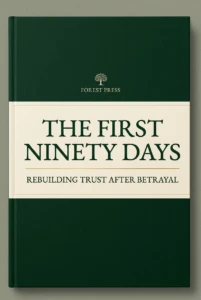
63. How do you rebuild emotional intimacy after infidelity? Through consistent transparency, patience, and reliability that’s proven over time rather than promised all at once. This is exactly the kind of gradual, step-by-step rebuilding covered in our First Ninety Days guide to rebuilding trust after betrayal. Small, consistent honesty habits practiced daily do far more to rebuild trust than one big reassuring conversation.
64. Can a marriage survive after one partner becomes emotionally attached to someone else? It’s possible, though never guaranteed, and it depends heavily on mutual commitment, full honesty, and often professional support to address the disconnection that allowed it to happen. Couples who commit to complete transparency and work on the root disconnection have rebuilt relationships that are genuinely stronger than before.
Questions about whether the relationship can be saved
65. Can emotional disconnection be repaired? In most cases, yes, with mutual willingness and consistent effort from both people, emotional disconnection is very repairable, even after long periods of drift. It rarely reverses through one dramatic conversation, but through the steady accumulation of many small ones.
66. How long does it take to reconnect emotionally? There’s no fixed timeline, but most couples notice real movement within weeks to a few months of consistent small efforts, not a single fix. It’s more like the gradual, step-by-step rebuilding covered in a 90-day recovery process than an overnight change.
67. Can you reconnect after years of emotional distance? Yes, it’s possible, though it usually requires more patience and persistence than reconnecting after a shorter period apart. Couples married twenty years who drifted for the last five have rebuilt real closeness through consistent weekly time together and, often, professional support.
68. What if only one partner wants to reconnect? One motivated partner starting small, genuine changes can sometimes invite the other back in over time, though ideally both people eventually engage, and a therapist can help address the imbalance directly if it persists. Making small positive changes without demanding an immediate matching response is a realistic starting point.
69. What if my partner refuses to talk about the relationship? Invitation tends to work better than pressure: modeling openness yourself, choosing calm moments, and considering individual therapy for yourself can all help, even if your partner isn’t ready yet. Timing matters as much as the words you choose.
70. How do you reconnect when both partners are tired? Start small: brief, low-effort connection rituals tend to work far better than expecting a big, energy-intensive gesture from two exhausted people. A five-minute check-in before bed is more sustainable, and often more effective, than waiting for the energy for one long, deep conversation that may never come.
71. Can a relationship recover after becoming emotionally cold? Yes. With genuine, sustained commitment from both people, warmth can be rebuilt gradually, even after a long cold period. It tends to return the same way it left: through small, repeated moments rather than one single turning point.
72. How do you know whether the relationship is disconnected or simply going through a difficult season? The key difference is duration and direction: a difficult season usually still includes small attempts to reconnect and eases once the pressure passes, while true disconnection tends to deepen and persist. A couple with a new baby might be exhausted but still share glances and inside jokes, which is very different from a couple who have stopped trying entirely.
73. When is emotional disconnection a temporary problem and when is it a sign the relationship is ending? Warning signs that point toward something more serious include a total absence of effort to reconnect, indifference replacing what used to be active conflict, and contempt entering the way you speak to each other. Ongoing effort, even imperfect effort, is a good sign; complete apathy on both sides is the concerning one.
74. Can couples fall in love again after emotional disconnection? Yes, and it’s actually a common experience, once emotional safety and consistent connection are rebuilt, attraction and warmth often resurface naturally. Couples frequently describe “falling for each other again” after months of consistent, patient reconnecting, sometimes feeling closer than they did even before the disconnection began.
Deeper questions people often avoid asking
75. When did we stop being emotionally close? There’s often no single date, but tracing back honestly (was it after a job change, a new baby, a specific hurt that was never resolved) can reveal a real starting point worth naming out loud to each other rather than leaving unspoken.
76. What happened between us that we never talked about? Almost every disconnected couple has at least one moment (a comment, an argument, a disappointment) that was never actually addressed and quietly became a root cause of distance. Naming that moment directly, even years later, is often more useful than trying to fix the general feeling of disconnection.
77. When did my partner stop feeling safe with me? This question asks you to look honestly at your own reactions: was there a moment you responded to their vulnerability with criticism, dismissal, or impatience that made them more guarded from then on? Recognizing your own part in the distance is often the first real step toward closing it.
78. When did I stop feeling safe with my partner? Just as worth asking of yourself: was there a specific moment their reaction, criticism, or absence made you decide it was safer to hold back? Naming that moment to yourself, and eventually to them, can explain patterns that otherwise feel confusing or unexplainable.
79. What have I been afraid to tell my spouse? Naming the fear itself (of judgment, of conflict, of disappointing them) is often the first real step toward honesty, even before you’re ready to say the thing out loud. Simply admitting to yourself “I’ve been avoiding telling them this” is progress.
80. What has my partner been trying to tell me through their silence? Silence is rarely empty: it usually communicates something, whether it’s hurt, exhaustion, fear, or a feeling of not being heard. Instead of assuming their quietness means indifference, it’s worth gently asking what’s underneath it.
81. Have we confused peace with emotional disconnection? A relationship with no fighting isn’t automatically a close one: sometimes “peace” is really just quiet distance, where neither person brings up anything real enough to disagree about. Genuine closeness usually includes occasional honest friction, not its complete absence.
82. Are we avoiding conflict or simply avoiding each other? There’s a real difference between choosing your battles wisely and quietly disengaging from each other altogether. If disagreements have stopped not because you’ve resolved them but because you’ve stopped engaging on anything meaningful at all, that’s avoidance of each other, not healthy conflict management.
83. Are we still partners, or have we become roommates? The “roommate” dynamic is one of the clearest markers of emotional disconnection: co-managing a household, a calendar, and finances smoothly, while the emotional partnership underneath has quietly disappeared. If your interactions are almost entirely logistical, that’s worth naming directly rather than assuming it’s just a normal phase.
84. Do I miss my partner, or do I miss who we used to be? It’s worth distinguishing between missing the actual person in front of you today and feeling nostalgic for an earlier version of your relationship. Both are valid, but they point toward different next steps: one toward reconnecting with who they are now, the other toward grieving what’s changed.
85. Am I emotionally withdrawing because I have stopped caring, or because I care too much and feel hurt? Withdrawal is far more often protective than indifferent: pulling back to avoid further pain, even while still caring deeply underneath. Recognizing which one is true for you can change how you approach reconnecting, since indifference and hurt need very different responses.
86. Is my partner actually emotionally unavailable, or have we both contributed to the distance? It’s rarely just one person’s fault: most disconnection develops through a two-way pattern, even if one partner’s withdrawal is more visible than the other’s. Looking honestly at your own contribution, rather than assigning all the responsibility to them, tends to open the door to real change.
87. What would happen if we stopped defending ourselves and started trying to understand each other? This is worth genuinely imagining: most arguments escalate because both people are focused on being understood rather than on understanding. A single conversation where both partners set aside self-defense, even briefly, often reveals far more than months of circling the same argument.
88. Can emotional disconnection exist even when there is no obvious conflict? Yes. This “silent drift” is actually more common than the dramatic, high-conflict version, precisely because there’s nothing loud enough to force either person to notice it. Two people can go months, even years, without a single real fight while growing quietly further and further apart.
89. What happens to a marriage when one person keeps reaching out and the other keeps pulling away? This pursue-withdraw pattern tends to escalate on its own: the more one partner pursues, the more the other withdraws to protect themselves, and the more they withdraw, the harder the other pursues. Recognizing this cycle by name is often the first step to interrupting it before it becomes the relationship’s default pattern.
90. How do two people who still love each other become strangers? Through the same quiet accumulation this entire article has described: one missed bid for connection at a time, one skipped conversation at a time, until months or years have passed. The reassuring part is that the same process runs in reverse: consistent, small attention rebuilds closeness the same way its absence eroded it.
Putting it into practice. You don’t need to work through all 90 of these questions at once. Pick the two or three that struck the strongest chord with you, and bring just those to your partner this week, not as an accusation, but as an honest “here’s something I’ve been thinking about us.” Then choose one small, repeatable habit from what you’ve just read: a ten-minute phone-free check-in each evening, noticing and turning toward each other’s small bids for connection, or simply asking “how are you, really?” and waiting for the real answer. Emotional disconnection builds one overlooked moment at a time, and it can be undone the same way, one moment at a time, starting today.