
Love Through Appreciation
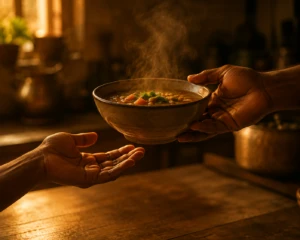
Love through appreciation means deliberately recognizing the value, effort, sacrifices, qualities, presence, and contributions of your wife instead of silently benefiting from everything she does. Appreciation is more than saying “thank you” occasionally. It is the ability to notice what another person does, understand the effort behind it, recognize its importance, and communicate that recognition sincerely. A wife can perform the same responsibilities every day for years, and because they become normal, her husband may eventually stop noticing them. She cooks, cleans, cares for the children, supports his work, manages family matters, encourages him, prepares things for the household, or simply remains beside him through difficult seasons. When these things become routine, they can become invisible. Appreciation brings them back into view. For example, a husband may come home and find dinner prepared every evening. After several years, he may simply sit down and eat without saying anything. But if he occasionally says, “I know you have had a long day, and I appreciate the effort you put into preparing this for us,” he communicates that he has not become blind to her contribution. Appreciation tells a wife, “What you do matters, I see it, and I do not consider your contribution automatic.”
Why does appreciation matter to a wife?
Appreciation matters because most people need to know that their efforts are seen and valued, and a wife is no different. Appreciation gives meaning to effort because it communicates that the husband is not merely receiving the benefits of what his wife does but is consciously recognizing the person behind those benefits. A wife may spend hours preparing food, caring for children, supporting her husband’s work, maintaining the home, or making sacrifices for the family. If her husband never acknowledges these things, she may eventually feel invisible even if he never intentionally insults her. For example, a wife may spend an entire Saturday cleaning the house while her husband is working or resting. When he returns, he may simply notice that the house is clean and say nothing. If he instead says, “The house looks great. I know you spent a lot of time getting everything organized, and I really appreciate what you have done,” the physical situation has not changed, but her emotional experience can change significantly. She now knows that he noticed her effort. Appreciation does not mean constantly praising her for every ordinary action. It means refusing to become so accustomed to her contribution that you stop seeing the person making the contribution.
Why should a husband acknowledge things his wife does that have become routine?
A husband should acknowledge routine things because repetition does not make effort disappear. Something can become normal to receive without becoming effortless to produce. A wife may prepare breakfast every morning, wash clothes, keep track of school requirements, prepare the children for school, remember family birthdays, manage household supplies, or support her husband emotionally. Because these activities happen repeatedly, the husband may begin treating them as if they happen automatically. But there is a person behind every routine. For example, a husband may wake up every morning and find his clothes clean and ready for work. After several years, he may stop thinking about who washed them, folded them, and prepared them. Appreciation means occasionally stopping to recognize that effort: “I know you take care of many things around this house that I don’t always notice. Thank you.” This does not mean the wife needs applause every time she washes a shirt. It means the husband maintains an attitude of awareness. Routine should create gratitude, not blindness. One of the dangers in long-term marriage is that familiarity can make a person notice what is missing while forgetting what is consistently being provided.
How does saying “thank you” strengthen marriage?
Saying “thank you” strengthens marriage because it creates a culture in which spouses recognize one another instead of assuming that everything they receive is automatically owed to them. A sincere “thank you” communicates respect and recognition. For example, when a husband comes home and his wife has prepared dinner, he can simply say, “Thank you for making dinner.” When she handles something difficult for the children, he can say, “Thank you for taking care of that.” When she supports him through a difficult period, he can say, “I really appreciate the way you stood beside me.” These words may seem small, but repeated over many years they create a different emotional atmosphere from one in which people only complain when something goes wrong. A marriage in which appreciation is common can become a place where both spouses feel noticed. The wife should also thank her husband for his contributions. Appreciation should move in both directions. The purpose is not to create a competition about who says thank you more. It is to establish a habit in which neither spouse becomes invisible.
Why should a husband appreciate his wife’s appearance without reducing her value to appearance?
A husband should appreciate his wife’s appearance because physical attraction is a legitimate part of marital love, and it can be meaningful for a wife to know that her husband still finds her beautiful and attractive. However, her appearance should not become the foundation of her value in his eyes. A woman’s body naturally changes through age, pregnancy, childbirth, illness, stress, weight changes, and other experiences. If a husband communicates that her only important quality is how young, thin, attractive, or sexually appealing she looks, he makes her feel that her worth is temporary and dependent on maintaining a particular appearance. A healthier husband can say, “You look beautiful today,” while also saying, “I admire the way you care for our children,” “I respect how hard you work,” “I love your kindness,” or “I appreciate the strength you have shown during difficult times.” For example, if his wife has gained weight after having children, he should not make her feel that she has become less worthy of love. He can continue expressing attraction while recognizing the whole woman. True appreciation sees both the body and the person. It says, “I am attracted to you, but you are much more than your appearance.”
How should a husband recognize his wife’s sacrifices?
A husband should recognize his wife’s sacrifices by noticing the things she has given up, changed, endured, or carried for the wellbeing of the marriage and family. Sacrifice does not always mean dramatic acts. Sometimes it is hidden in ordinary decisions. A wife may postpone personal plans to care for a child, reduce work opportunities because of family responsibilities, spend less time with friends because the family needs her, support her husband’s career during a difficult period, move to another location for the family’s benefit, or repeatedly put the family’s needs before her own. The husband should not assume that because she willingly made a sacrifice, it therefore cost her nothing. For example, if a wife leaves a job opportunity because the family needs her to care for a newborn, the husband should recognize what that decision may have cost her personally. He can say, “I know you gave up an opportunity that mattered to you because of what our family needed. I do not take that for granted.” Recognition does not necessarily mean repaying every sacrifice. Sometimes the most important thing is simply acknowledging that it happened. When a sacrifice is seen, the person who made it feels that their cost was not invisible.
What happens when a wife constantly gives but rarely receives appreciation?
When a wife constantly gives but rarely receives appreciation, she may eventually experience emotional exhaustion, resentment, discouragement, or the feeling that her contributions have become invisible. The danger is not necessarily that she expects praise for everything she does. The deeper problem is that continuous giving without recognition can create the feeling that the relationship has become one-sided. For example, imagine a wife who spends years caring for children, managing the home, supporting her husband, preparing meals, and helping the family through difficult situations. Her husband benefits from all these things but rarely says thank you, rarely notices her effort, and mainly speaks to her when something is wrong. At first, she may continue because she loves her family. Eventually, however, she may begin thinking, “Does anyone even notice what I do?” She may become emotionally tired. She may still perform her responsibilities, but the joy behind them can disappear. This is why appreciation matters. It can restore the feeling that giving is being seen. The husband should not wait until his wife is deeply resentful before beginning to appreciate her. Appreciation is preventative care for the emotional health of a marriage.
How does taking your wife for granted slowly destroy affection?
Taking a wife for granted means becoming so accustomed to receiving her love, effort, presence, and support that you stop treating those things as valuable. This can slowly destroy affection because people generally become discouraged when their efforts repeatedly go unnoticed. A husband may never intentionally decide, “I am going to destroy my wife’s affection for me.” Instead, the process may happen through years of small behaviors. He stops saying thank you. He stops noticing when she dresses nicely. He stops asking about her day. He expects her to handle household matters without acknowledging them. He notices immediately when dinner is late but never notices when it is prepared on time. He complains about what she does wrong but rarely recognizes what she does well. Over time, the wife may stop feeling emotionally rewarded by giving to the relationship. For example, she may prepare her husband’s favorite meal and receive no response. Eventually, she may stop making the effort because she has learned that it makes no difference to him. Taking someone for granted therefore does not usually destroy affection in one dramatic event. It can slowly convince the other person that their effort, presence, and love are not being valued.
Why can criticism without appreciation damage a marriage?
Criticism without appreciation creates an emotional environment in which one spouse becomes highly aware of their failures but rarely experiences recognition for their successes or contributions. For example, a husband may complain when his wife forgets something, when dinner is late, when the house is untidy, or when she makes a decision he dislikes. But when she cooks, cleans, supports him, cares for the children, or handles difficult responsibilities well, he says nothing. Over time, she may begin feeling that she can never do enough. This does not mean spouses should never correct one another. Healthy marriage requires honest conversations about problems. The issue is imbalance. If a husband has ten things to criticize but cannot identify one thing to appreciate, he is creating an environment where his wife experiences him mainly as a judge. A healthier pattern is to address problems while maintaining awareness of what is working. He can say, “We need to talk about how we are handling the household budget, but I also want you to know that I appreciate how much you have done to keep our family running.” Correction becomes easier to receive when the person knows they are not generally viewed as a failure.
How should a husband appreciate the work his wife does in the home?
A husband should appreciate household work by recognizing both the visible result and the effort required to produce it. Cleaning a house may look simple when everything is already clean, but someone had to spend time doing it. Food may appear on the table, but someone had to plan, purchase, prepare, cook, serve, and clean afterward. Children may arrive at school prepared, but someone had to organize clothes, books, food, transport, and schedules. A husband can therefore acknowledge these contributions directly. For example, he might say, “I came home and found everything organized. I know that takes a lot of work, and I appreciate you.” He can also demonstrate appreciation by helping rather than merely speaking. If he recognizes that his wife has spent the whole day cleaning, he can take responsibility for cleaning up after dinner. Appreciation becomes stronger when words and actions agree. A husband who says, “I appreciate everything you do,” while consistently leaving every responsibility to his wife may eventually make those words meaningless. Genuine appreciation should influence behavior.
How should a husband appreciate his wife’s emotional support?
A husband should appreciate emotional support by recognizing that listening, encouraging, comforting, believing in someone, and standing beside them during difficult periods are forms of real contribution. Emotional support is often invisible because it does not produce a physical object. A wife may spend hours listening to her husband discuss work problems, encouraging him when he feels like giving up, helping him think through difficult decisions, or simply remaining beside him when life becomes painful. He may eventually forget that these conversations required her time and emotional energy. For example, if a husband is struggling after a business failure, his wife may continue encouraging him, helping him think about the next step, and reminding him that one failure does not define his life. Once his situation improves, he should remember who stood beside him. He can say, “When things were difficult, you did not abandon me. I remember that, and I appreciate you.” Recognition like this tells a wife that her emotional investment was meaningful. It also encourages both spouses to become sources of strength for each other.
How can a husband appreciate his wife’s character rather than only what she does?
A husband should appreciate not only his wife’s actions but also the qualities that make her the person she is. Appreciation of character means recognizing qualities such as honesty, kindness, patience, courage, wisdom, loyalty, generosity, responsibility, compassion, discipline, faithfulness, resilience, or humility. For example, instead of only saying, “Thank you for cooking,” a husband might also say, “I admire how patient you are with the children,” or “I respect how you remained calm during that difficult situation.” This is important because a person’s value should not depend entirely on their usefulness. If a wife becomes sick or temporarily cannot perform many household responsibilities, she should not suddenly feel that she has lost her value in her husband’s eyes. Character-based appreciation communicates that he loves the person, not merely the services she provides. The same principle applies to the husband. A wife should recognize his character rather than only appreciating his income. When spouses appreciate who each other are, rather than only what each other produces, the marriage becomes more secure because love is not based entirely on performance.
How should a husband appreciate his wife’s growth?
A husband should appreciate his wife’s growth by noticing how she has developed as a person throughout the marriage and recognizing the effort behind that development. People change. A wife may become more confident, develop professional skills, become a better parent, learn to communicate more effectively, overcome fears, become more financially responsible, or develop greater emotional maturity. The husband should not continue viewing her only as the person she was when they first married. For example, perhaps his wife started a small business that was initially difficult but gradually became successful. He can tell her, “I have watched how hard you have worked and how much you have learned. I am proud of how you have grown.” Appreciation of growth communicates that he is paying attention to her journey. It also encourages her to continue developing. A marriage should not become a place where one spouse becomes threatened by the other’s growth. Healthy spouses can celebrate each other’s development while remaining secure in their own identities. Appreciation says, “I see the person you are becoming, and I value that journey.”
Why should a husband appreciate his wife’s efforts even when the result is imperfect?
A husband should appreciate effort because love should not only reward perfect outcomes. Sometimes a wife can genuinely try to do something well and still make mistakes. If the husband only appreciates perfect results, she may become afraid to try, contribute, or take initiative. For example, suppose his wife tries to prepare a meal he has never eaten before. The food does not turn out exactly as expected. A husband can mention what could be improved without mocking her effort. He might say, “It did not turn out exactly as we expected, but I appreciate that you took the time to make it.” That response recognizes the intention and effort while still allowing room for improvement. The same principle should apply to the husband. If he tries to help with something and does it imperfectly, his wife should not use the mistake as proof that he should never help again. Appreciation creates an environment in which spouses can contribute, learn, and improve without feeling that every mistake will be punished. This does not mean ignoring serious problems. It means distinguishing between a person’s effort and the perfection of the result.
How can appreciation make a wife feel emotionally safe?
Appreciation can make a wife feel emotionally safe because it communicates that her husband sees her positively and does not only pay attention when something goes wrong. If a wife knows that her husband notices her efforts, values her character, recognizes her sacrifices, and expresses gratitude, she may feel more secure in the relationship. For example, if a husband regularly says, “I appreciate you,” “I am proud of you,” “Thank you for what you did today,” or “I noticed how you handled that situation,” his wife receives repeated evidence that she is valued. This does not eliminate conflict. They can still disagree. But when disagreement happens, she knows that the relationship contains recognition as well as correction. Compare this with a marriage where the husband rarely expresses appreciation but immediately points out every mistake. The wife may begin walking on eggshells, constantly wondering whether she is good enough. Emotional safety does not mean a spouse should never receive criticism. It means criticism exists within a larger environment of respect, affection, and recognition.
How can a husband appreciate his wife’s appearance in a healthy way?
A husband can appreciate his wife’s appearance by expressing genuine attraction while also making it clear that her worth is much greater than her physical appearance. He can notice when she has dressed nicely, compliment her hairstyle, tell her that she looks beautiful, or express physical attraction in appropriate private moments. For example, if his wife dresses up for an event, he can say, “You look beautiful. I really like how you look tonight.” That can be meaningful. But he should not make every conversation about her body or compare her with younger women or other women. He should also continue expressing appreciation when she is not dressed up, when she is tired, when she is recovering from childbirth, or when age has changed her appearance. He can say, “You are beautiful to me,” while also appreciating her wisdom, humor, strength, character, and companionship. This creates a healthier form of attraction because the wife knows that her husband desires her without reducing her identity to her body. Physical appreciation is good in marriage when it is combined with appreciation of the whole person.
What should a husband do when his wife changes physically with age?
A husband should understand that physical change is a normal part of human life and should not allow natural changes in his wife’s body to become an excuse for contempt, humiliation, or emotional abandonment. Pregnancy, childbirth, aging, stress, illness, changes in weight, and other life experiences can alter a woman’s body. The husband’s responsibility is not to pretend that he cannot see change. It is to continue treating his wife with dignity, affection, attraction where it exists, and respect. For example, after childbirth, a wife’s body may not immediately return to how it looked before pregnancy. She may already feel insecure about those changes. A husband who jokes about her body or constantly compares her to other women can deepen that insecurity. A loving husband can instead communicate, “Your body has changed because of what you have gone through, but I still love you, I still value you, and I am still attracted to you.” He can also appreciate what her body has endured without reducing her to motherhood. Mature marital attraction understands that loving someone for decades means loving a real human body that will naturally change rather than expecting a permanently unchanged appearance.
Why is appreciation important during difficult seasons?
Appreciation is especially important during difficult seasons because stress can make people notice problems more easily than contributions. When a couple is dealing with financial pressure, illness, parenting difficulties, unemployment, business failure, family conflict, or other challenges, spouses may become so focused on survival that they stop recognizing each other’s efforts. For example, a husband may be under serious financial pressure and become frustrated about every expense. His wife may also be working hard to stretch the available money, manage the household, and support him emotionally. If he only complains about what is not working, she may feel that her efforts are invisible. He can instead say, “I know things are difficult, but I appreciate how you are helping us get through this.” That does not solve the financial problem, but it strengthens the relationship while they solve it. Difficult seasons require more intentional appreciation because both spouses are already emotionally depleted. A simple statement of recognition can prevent the marriage from becoming another source of discouragement.
How can a husband appreciate his wife when money is limited?
A husband does not need significant money to express appreciation. Appreciation is fundamentally about recognition, not spending. He can write a short note, send a thoughtful message, give her a genuine compliment, prepare her favorite meal, make her tea, give her time to rest, take over a household responsibility, listen to her, pray with her if that fits their beliefs, or simply tell her what he values about her. For example, if the couple cannot afford an expensive anniversary celebration, the husband can prepare a simple meal, turn off their phones, sit with his wife, and tell her, “I am grateful that we have built this life together. I appreciate the way you have stood beside me.” That may be more emotionally valuable than buying something expensive simply to satisfy an expectation. Money can enhance appreciation, but money cannot replace sincere recognition. A husband with limited resources can still make his wife feel valued because appreciation is primarily communicated through attention, words, and behavior.
How can a husband make appreciation a normal part of marriage rather than something reserved for special occasions?
A husband can make appreciation normal by developing the habit of noticing and expressing gratitude during ordinary life instead of waiting for birthdays, anniversaries, Valentine’s Day, or major achievements. He can intentionally recognize small contributions as they happen. For example, when his wife prepares breakfast, he can thank her. When she handles a difficult issue with the children, he can tell her he noticed. When she supports him through a difficult day, he can acknowledge it. When she looks beautiful, he can say so. When she makes a wise decision, he can tell her he respects it. The key is consistency rather than extravagance. Appreciation should become part of the everyday language of the marriage. A husband does not need to deliver a speech every night. Sometimes one sincere sentence is enough: “I appreciate you.” “Thank you for doing that.” “I noticed what you did.” “You handled that situation well.” “I am grateful to have you.” When these expressions become normal, they prevent appreciation from becoming something that only appears when the relationship is in trouble.
How can appreciation change the atmosphere of a marriage?
Appreciation can change the atmosphere of a marriage by shifting attention from constant deficiency to recognition of what is good, valuable, and meaningful. This does not mean pretending that problems do not exist. A couple can still discuss finances, parenting, sex, communication, household responsibilities, and serious disagreements. But if appreciation is present, those conversations occur within a relationship where both people also know that their positive contributions are seen. For example, imagine a husband who normally comes home and immediately complains about what is wrong. He begins changing his habit by first recognizing something his wife has done well. Instead of saying, “Why is this not finished?” he may say, “I appreciate what you managed to accomplish today. There is still something we need to discuss, but I see how much you have already done.” That small change can alter the tone of the conversation. The wife is more likely to hear the correction without feeling that her entire contribution has been rejected. Over time, appreciation creates an emotional environment in which spouses are more likely to encourage each other than constantly evaluate each other.
What is the danger of appreciating your wife only when you want something from her?
If a husband only becomes appreciative when he wants sex, money, cooperation, forgiveness, or some other benefit, his appreciation can begin to feel manipulative rather than genuine. For example, if a husband suddenly tells his wife, “You are the most beautiful woman in the world,” only when he wants sexual intimacy, she may eventually recognize the pattern and wonder whether the compliment is sincere. Likewise, if he becomes unusually kind only when he wants her to agree with an important decision, she may feel that his affection is conditional. Genuine appreciation should exist independently of what the husband wants to receive. He should be able to say, “I appreciate you,” when he is not asking for anything. He should notice her efforts even when there is no immediate benefit to him. This creates credibility. The wife learns that when her husband praises her, he is not necessarily preparing to ask for something. His appreciation is simply part of how he relates to her. The same principle applies to wives appreciating their husbands.
How should appreciation be expressed when spouses have unresolved problems?
Appreciation and correction can exist together. A husband does not have to ignore serious problems simply because he wants to appreciate his wife. He can recognize what she does well while honestly addressing what needs to change. For example, if the couple is struggling financially because of poor spending decisions, the husband can say, “I appreciate how hard you work to manage the household, but I think we need to change how we are handling our spending.” The appreciation does not cancel the correction, and the correction does not cancel the appreciation. This is important because mature marriage requires both truth and kindness. If a husband uses appreciation to avoid difficult conversations, problems remain unresolved. If he uses correction without appreciation, his wife may feel constantly attacked. The healthy balance is to communicate, “I value you, and because I value our marriage, I also want us to address this problem.” Appreciation should therefore not become false praise. It should be truthful recognition within an honest relationship.
What does appreciation communicate about the value of a wife?
Appreciation communicates that a wife is not invisible, replaceable, or merely useful. It tells her that her presence has meaning beyond the tasks she performs. A husband who appreciates his wife is saying, “I recognize what you bring into my life. I recognize the person you are. I notice your effort, your sacrifices, your character, your companionship, and the ways you contribute to our family.” For example, a husband may say, “I appreciate how you have stood with me through difficult years,” rather than simply thanking her for washing clothes or cooking. This recognizes the broader role she has played in his life. Appreciation also helps prevent entitlement. When a husband realizes that the person beside him is freely giving time, love, energy, loyalty, companionship, and effort, he becomes less likely to treat those things as automatic possessions. He understands that having a loving wife is something to be grateful for, not something he should assume will continue regardless of how he treats her.
How does appreciation fit into “love your wife as yourself”?
To love your wife as yourself means recognizing that you would want your own efforts to be noticed, your sacrifices to be remembered, your appearance to be appreciated, your character to be respected, your contributions to be valued, and your presence to be considered meaningful. Therefore, you should extend that same recognition to your wife. If you would feel discouraged after working hard for years and never hearing “thank you,” understand that she may experience the same thing. If you would want your wife to notice when you make sacrifices for the family, notice hers. If you would want encouragement when you are trying to grow, encourage her. If you would want your good qualities to be recognized rather than having your mistakes become your entire identity, treat her the same way. For example, a husband may say, “I know I don’t always say it, but I see how much you do for this family. I appreciate your strength, your patience, and the way you have stood beside me.” That statement is powerful because it communicates recognition rather than entitlement. Loving your wife as yourself therefore means refusing to become so familiar with her that her goodness becomes invisible to you.
What is the deepest lesson of love through appreciation?
The deepest lesson is that people should not have to become absent before their value becomes obvious. A husband should not wait until his wife leaves, becomes emotionally distant, stops trying, or becomes deeply resentful before he realizes how much she contributed to his life. Appreciation is the practice of recognizing value while the person is still beside you. It means looking at the ordinary things your wife does and remembering that they are not automatic. Someone chooses to love you. Someone chooses to support you. Someone gives time to your children. Someone shares your burdens. Someone listens to you. Someone stands beside you during difficult seasons. Someone may sacrifice opportunities for the wellbeing of the family. Someone may continue loving you when you are imperfect. Those things should not become invisible simply because they happen repeatedly. A husband who truly loves his wife as himself learns to say, through both words and actions, “I see you. I see what you do. I see what you have sacrificed. I see who you are. I do not want to become so accustomed to having you that I forget how valuable you are.” That is appreciation as a daily expression of love.